Deciding how to heat your home has become one of the most significant financial and environmental choices a UK homeowner can make. As we navigate through 2026, the energy landscape looks vastly different than it did just a few years ago. With volatile gas prices and the government’s “Warm Homes Plan” in full swing, many are asking the same question: Is the Boiler Upgrade Scheme still worth it in 2026?
In this article, we’ll dive deep into the current state of the scheme, the latest grant amounts, and the brand-new technology additions for 2026 to help you decide if it’s time to ditch the fossil fuels for good.
What is the Boiler Upgrade Scheme (BUS)?
The Boiler Upgrade Scheme (BUS) is a government initiative in England and Wales designed to help property owners transition from fossil fuel heating—like gas, oil, or LPG—to low-carbon alternatives.
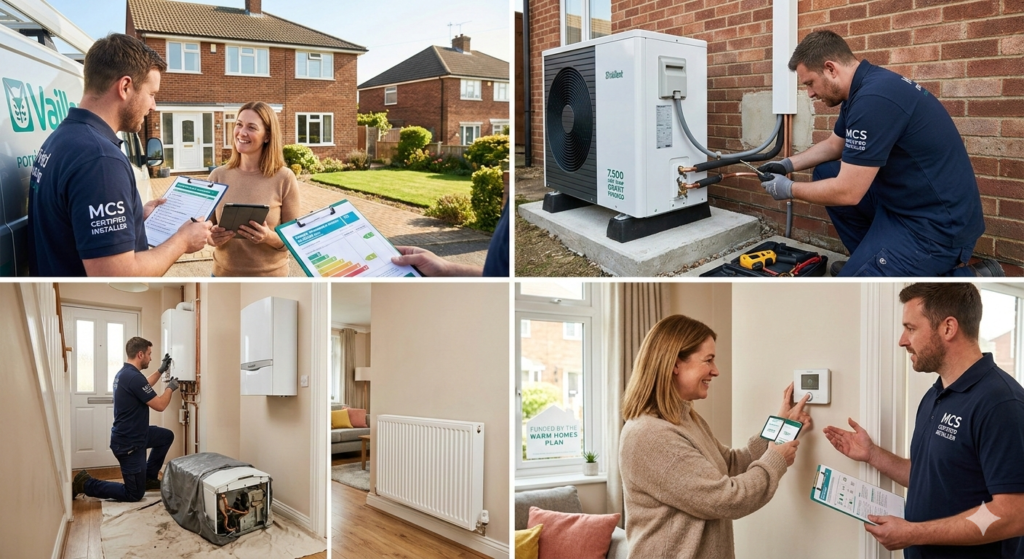
By 2026, the scheme has evolved from a niche pilot into a cornerstone of the UK’s net-zero strategy. It works on an installer-led voucher system, meaning you don’t have to fill out mountain-sized stacks of paperwork. Your chosen MCS-certified installer handles the application, and the grant is deducted directly from your final invoice.
Is the Boiler Upgrade Scheme Still Worth It in 2026? (The Verdict)
To answer the big question—is the Boiler Upgrade Scheme still worth it in 2026?—the short answer is a resounding yes.
In 2026, the scheme is more accessible than ever. The government has not only maintained the increased grant levels introduced a couple of years ago but has also removed several “red tape” barriers that previously frustrated homeowners. If you are looking to future-proof your home against rising gas costs and impending boiler phase-outs, the financial support available now is likely the best it will ever be.
1. Increased Grant Amounts
When the scheme launched, grants were set at £5,000. In 2026, the funding remains at its peak:
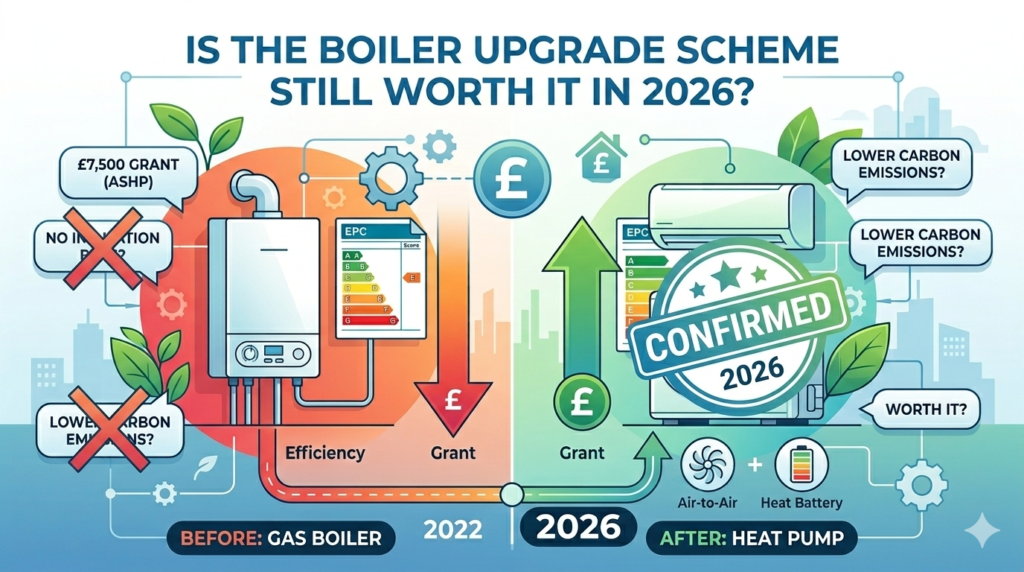
- Air Source Heat Pumps (ASHP): £7,500
- Ground Source Heat Pumps (GSHP): £7,500
- Biomass Boilers: £5,000
2. The “No-Insulation” Rule Change
One of the biggest updates in 2026 is the removal of the mandatory insulation requirement. Previously, you couldn’t get the grant if your Energy Performance Certificate (EPC) recommended loft or cavity wall insulation. Now, while insulation is still recommended for efficiency, it is no longer a legal barrier to receiving your £7,500.
New 2026 Additions: Air-to-Air and Heat Batteries
For the first time this year, the scheme has expanded to include more versatile technologies. This expansion is a major reason why people are asking, “is the Boiler Upgrade Scheme still worth it in 2026?” because it now covers a wider range of home types.
Air-to-Air Heat Pumps
Starting in late 2026, a new £2,500 grant is available for air-to-air heat pumps. These are perfect for:
- Flats or smaller apartments.
- Homes that don’t have a traditional radiator system.
- Homeowners who want summer cooling as well as winter heating.
Heat Batteries
The 2026/27 funding cycle also introduces support for heat batteries. These devices store thermal energy (often from solar panels or off-peak electricity) to be used for hot water later, further driving down your monthly bills.
Comparing Costs: Heat Pump vs. Gas Boiler in 2026
Even with a grant, the “sticker price” of a heat pump can look daunting. Let’s look at how the numbers stack up this year:
| Feature | Air Source Heat Pump | Modern Gas Boiler |
| Typical Install Cost | £10,000 – £13,000 | £2,500 – £4,000 |
| 2026 BUS Grant | -£7,500 | £0 |
| Your Final Cost | £2,500 – £5,500 | £2,500 – £4,000 |
| Lifespan | 20–25 Years | 12–15 Years |
| Carbon Emissions | ~70% Lower | High |
As the table shows, the £7,500 grant effectively brings the price of a heat pump down to the same level as a premium gas boiler. When you consider that a heat pump lasts nearly twice as long, the “cost per year” is significantly lower for the low-carbon option.
Eligibility Criteria in 2026
To ensure your application is successful, you must meet the following criteria:
- Location: You must live in England or Wales.
- Ownership: You must own the property (private landlords are eligible; social housing is not).
- System Type: You must be replacing an existing fossil fuel system (gas, oil, or LPG).
- Certification: You must use an MCS-certified installer. If your “mate who does plumbing” isn’t certified, your grant will be void.
- EPC: You need a valid EPC issued within the last 10 years.
Frequently Asked Questions (FAQs)
Is the Boiler Upgrade Scheme means-tested?
No, it doesn’t matter if you earn £20,000 or £200,000. If you own an eligible property and are replacing a fossil fuel boiler, you are entitled to the grant.
Can I get the grant for a new-build home?
Generally, no. The scheme is designed for retrofitting existing homes. However, if you are building your own home (a self-build), you may be eligible.
Do I have to pay the money back?
Absolutely not. The BUS grant is a one-off capital contribution, not a loan.
Is the Boiler Upgrade Scheme still worth it in 2026 if I live in a cold area?
Yes! Modern heat pumps are designed to operate efficiently even in temperatures as low as -15°C. In 2026, the technology is more than capable of keeping a UK home warm through the winter.
How long does the application take?
Because the installer handles the voucher, the approval usually happens within a few weeks of your quote being accepted.
Conclusion
So, is the Boiler Upgrade Scheme still worth it in 2026? When you weigh the £7,500 upfront discount against the rising costs of fossil fuels and the long-term reliability of renewable energy, the answer is a clear “yes.” The 2026 updates have made the process smoother, removed annoying insulation barriers, and introduced grants for smaller homes via air-to-air systems.
If your current boiler is over 10 years old, now is the time to act. Using the title of this scheme to your advantage today could save you thousands of pounds over the next decade. Don’t wait until the funding runs out or the 2035 gas boiler phase-out makes the transition more stressful.
Would you like me to help you find a list of MCS-certified installers in your specific area to get a quote?